Wednesday, September 26, 2007

Shorter Weekend Means Less Drinking


Friday morning classes can prevent Thursday night binge drinking at colleges and universities, a study from the University of Missouri says. The results of this research has some college campuses offering more Friday morning classes.

Students with the opportunity to sleep in on Friday tend to drink (on average) just over one additional drink on Thursday night than students who have a class before 10a.m. Friday.

The study is published in the July issue of Alcoholism: Clinical and Experimental Research, and will be on reserve at Logue Library in early October. Search the "Education Research" databases in EBSCOhost and Newsbank's major US newspapers using keywords college students AND drinking AND friday.

An earlier study of New Zealand Students showed similar results, but emphasized that students with heavier drinking habits simply avoid scheduling Friday classes.* Some schools are encouraged by the current research to offer more Friday morning required courses to make heavier drinking habits less convenient.

This article from the Columbia Tribune in Columbia, Missouri, home of the University of Missouri, is free on the web here:
Drinking study prompts change, but not at MU
By JONATHON BRADEN of the Tribune’s staff
Published Monday, September 24, 2007

*Friday Class and Heavy Alcohol Use in a Sample of New Zealand College Students. By: Paschall, Mallie J.; Kypri, Kypros; Saltz, Robert F.. Journal of Studies on Alcohol, Sep2006, Vol. 67 Issue 5, p764-769.

Monday, July 16, 2007

First Year Students Read Wicked!


Wicked: The Life and Times of the Wicked Witch of the West
by Gregory Maguire

Summary from the publisher:
When Dorothy triumphed over the Wicked Witch of the West in L. Frank Baum's classic tale, we heard only her side of the story. But what about her arch-nemesis, the mysterious witch? Where did she come from? How did she become so wicked? And what is the true nature of evil?

Gregory Maguire creates a fantasy world so rich and vivid that we will never look at Oz the same way again. Wicked is about a land where animals talk and strive to be treated like first-class citizens, Munchkinlanders seek the comfort of middle-class stability and the Tin Man becomes a victim of domestic violence. And then there is the little green-skinned girl named Elphaba, who will grow up to be the infamous Wicked Witch of the West, a smart, prickly and misunderstood creature who challenges all our preconceived notions about the nature of good and evil.

  • What do you think of the differing points of view in the two reviews that follow?

Reviews:

Kirkus Reviews, 09/15/1995
Maguire, up to now a writer of kids' books, turns his considerable child-captivating skills to adults--and adult children--in this magical telling of the land of Oz before and up to the arrival of Dorothy and company. While perhaps not quite as wonderful a land as Alice's, Maguire's Oz is magical and intriguing, and he adeptly fills in the ""historical"" background of talking animals, tin woodsmen, flying monkeys, and rejoicing Munchkins without it ever seeming familiar or contrived.

In Munchkinland, a green-skinned baby is born to an often absent missionary preacher and the often drunk heiress to the county seat, neither of them Munchkins themselves. Baby Elphaba's parents' habits being what they are, though, her true father long remains a mystery--as it does for her sister, Nessarose, born two years later with pink skin but sans arms (magic red shoes will later enable her to walk without assistance). The girls grow up and attend the university, where Elphie, always the outsider in her verdant skin, is bright, sharp-tongued, and aloof. Nessie, unable to touch, has chosen an untouchable world and lives her life in religious sanctimoniousness. Elphie's roommate is--perfectly--Glinda, a dippy, well-intentioned debutante sort majoring in sorcery. Meanwhile, the school's frightening headmistress places a spell on the girls and assigns each of them a quadrant of the land, leaving one unattended. Elphie is conscientious and honest, hardly a witch and certainly not evil, but her life unfolds along a path that is well laid out, though not by her.

Her journey along this road is a captivating, funny, and perceptive look at destiny, personal responsibility, and the not-always-clashing beliefs of faith and magic. Save a place on the shelf between Alice and The Hobbit.


SPOILER WARNING: This next review might give away some detail you wish you hadn't seen if you haven't finished the book yet!

The New York Times
October 24, 1995
Let's Get This Straight: Glinda Was the Bad One?
by Michiko Kakutani

The Wicked Witch of the West revealed as an idealistic victim? The green-skinned harridan played by Margaret Hamilton unmasked as the dermatologically challenged product of a dysfunctional family? The scourge of Oz depicted as a dissident, a brave fighter against a totalitarian regime?

At first Gregory Maguire's "Wicked" sounds like a joke, like a satire from James Finn Garner's "Politically Correct Bedtime Stories," but we soon realize that Mr. Maguire is deadly serious, and that he has produced a book that's deadly dull. His theme seems to be that "people who claim that they're evil are usually no worse than the rest of us."

"It's people who claim that they're good, or anyway better than the rest of us," a character says, "that you have to be wary of."

Certainly as one of America's most beloved classics of children's literature, "The Wonderful Wizard of Oz" is a natural target for literary recyclers. But unlike Geoff Ryman, whose 1992 novel, "Was," used the story of Dorothy's adventures in Oz as a jumping-off point for a thoughtful meditation on the enduring power of fantasy and art, Mr. Maguire shows little respect for L. Frank Baum's original story. Rather than cleverly build upon it or ingeniously send it up (as Donald Barthelme did, say, with "Snow White"), Mr. Maguire simply uses Baum's most famous characters as fodder for his own philosophizing. His alterations, annotations and embroideries have so little to do with the original story that they're neither amusing nor provocative; to make matters worse, they're relentlessly politically correct.

In Mr. Maguire's retelling, the Wicked Witch of the West wasn't wicked, just misunderstood. Glinda, the Good Witch, was a sanctimonious socialite obsessed with money and status. And the Wizard of Oz was an out-and-out tyrant, a sort of combination Hitler-Stalin-Darth Vader, who instituted pogroms against minority groups and enforced his despotic rule with pillaging storm troops.

As Mr. Maguire tells us, the Wicked Witch of the West was once a little girl named Elphaba (or Elphie, for short), who was born to a priest's promiscuous wife in a ramshackle hamlet in Munchkinland. Her green skin made her an instant pariah. Her own mother thought of drowning her; her father said she was "born to curse my life." She was mocked by other children and called all manner of names: the "little demon," "the little monster" and "lizard girl." She grew up with a younger sister named Nessa, a beautiful armless girl who thought of herself as a saint.

In time, Elphie goes off to school, where the other girls make fun of her looks and ugly clothes. She has become a Holden Caulfield-sort of adolescent: sensitive, moody and suspicious of phonies. Of those phonies, her roommate, Glinda, is among the worst: snooty, vain and spoiled. Though the two girls become friends for a while, though Elphie will do her best to broaden her roomie's outlook, the beautiful Glinda will later revert to her selfish ways.

Elphie has always been a fierce, idealistic girl, and she soon becomes involved in the fight for Animal rights. It seems that the Wizard of Oz has restricted the freedom of Animals and is threatening to turn them into chattel, slaves who can actually be owned and bartered by others. Elphie begins working in secret with her favorite teacher, Doctor Dillamond, a Goat, who is conducting scientific research to prove that "there isn't any inherent difference between humans and Animals." He dies under mysterious circumstances, and Elphie becomes convinced that he has been murdered, perhaps by the headmistress of the school, Madame Morrible, who has tried to recruit Elphie, Glinda and Nessa as secret agents for the Government.

Having become thoroughly radicalized, Elphie drops out of school, becomes an anarchist and goes underground. After her lover, Fiyero, is killed, she joins a nunlike order of "maunts" and takes care of the ill and dying. A long journey that eventually results in a visit home, however, will leave Elphie increasingly disillusioned and paranoid, and she will embrace her destiny as the Wicked Witch of the West. Her antipathy toward Dorothy, Mr. Maguire suggests, stems from Dorothy's possession of Nessa's magical shoes and from Elphie's own sense of identification with the young girl from Kansas, from her realization that "Dorothy reminds me of myself, at that age."

Although Mr. Maguire demonstrates a knack for conjuring up bizarre adventures for Elphie and introducing her to an eccentric cast of creatures (though nowhere near as enchanting as the many creatures Baum invented in his multiple sequels to "The Wonderful Wizard of Oz"), his insistence on politicizing Oz and injecting it with a heavy dose of moral relativism turns a wonderfully spontaneous world of fantasy into a lugubrious allegorical realm, in which everything and everyone is labeled with a topical name tag.

His ponderous language underscores this ideological impulse, and further weighs his story down. Elphie says things like, "There's nothing ontologically interesting about magic." And she and the other characters spend pages and pages debating things like the nature of good and evil, and the difference between sorcery and science. Dorothy's ruby slippers are now referred to as "the totemic shoes" and the Emerald City is described by Glinda as "juvenile" and "devoid of irony."

"You have no sense of the pitch of unrest to which things have mounted," Madame Morrible says at one point. "Setting communities on edge, ethnic groups against one another, bankers against farmers and factories against shopkeepers. Oz is a seething volcano threatening to erupt and burn us in its own poisonous pus."

Such passages only make the reader long to return to the original Oz, the Oz invented by Baum nearly a century ago. As Dorothy said in the movie: "There's no place like home. There's no place like home."
~~~~~~
In response to the question in the first comment and answered in the second comment, I am posting the links here, where a click will open the webpages:

Sunday, April 22, 2007

Research and Dot-Orgs

The dot-org (.org) Internet domain registration is “recommended for” the websites of non-profit, non-governmental organizations. However, there are currently no restrictions or requirements for registration. With this in mind, it is necessary to look at the information provided by .orgs just as carefully as you would a .com, especially since .orgs provide research data to uphold their claims.

Many .orgs use funds to conduct research in support the point of a view they are promoting. Knowing the source of the study and who funded it, and being able to look at the actual study and not just the particular “spin” the .org is using will help you discern the validity of the research and the accuracy of the claims being made on the web site.

Ask yourself these questions:

  • Who funded the study?
  • Who conducted the research?
  • Who interpreted the results?
  • What interest do the funders have in the results of the test?
  • Were the researchers in any way affiliated with an industry with a conflict of interest?

And finally…

  • Where does the .org itself (presumably a non-profit, non-governmental organization) get the lion’s share of their funding?
A recent question came in: “Some of [the American Dietetic Association]’s recommendations are sound. But the fact is... everything they publish must be carefully read for bias. Who has time for that?”
The answer: You have to make the time! Kudos for the observation that every individual claim should be checked out, even if a .org might have published excellent information in the past.

*Conflict of interest. A person has a conflict of interest when the person is in a position of trust which requires her to exercise judgment on behalf of others (people, institutions, etc.) and also has interests or obligations of the sort that might interfere with the exercise of her judgment, and which the person is morally required to either avoid or openly acknowledge. (University of Nebraska Medical Center ethics glossary.)

Tuesday, March 27, 2007

Getting Current Primary Sources


Researching a topic that is currently in the news means that there is an abundance of good information available. While using articles from scholarly journals found in databases like EBSCOhost is important for seeing historical trends, gathering statistics, and understanding the breadth of the topic, current events also need current resources.

Some topics address developing or on-going situations, such as the issues concerning the environment, the health-care crisis in Africa, or the upcoming U.S. Presidential campaign. Checking noted newspapers like the New York Times, the Philadelphia Inquirer, and the Washington Post, as well as newspapers worldwide, will provide current context to compliment the historic profile.

Interviews with national leaders and noted experts in the field of research provide "primary source" information valuable to college research.

Currently, Logue Library's subscription database NewsBank, provides special reports on
  • The African Health Crisis
  • Women's History
  • Presidential Campaign 2008
  • World Health
  • Iraq
  • Natural Disasters Around the World
  • World Environment Science
  • Health in the News
To access NewsBank, registered Chestnut Hill College students will need valid email username & password information, or a valid Logue Library barcode number.

Tuesday, March 13, 2007

Wrapping up the Research Paper


Check list

  • The topic matches the assignment, and the research matches the topic
  • Double-check the outline to be sure every item in the finished paper is covered.
  • Be sure all quotes and paraphrases are properly attributed
  • Ask a trusted friend to read and critique the paper
  • Make final revisions
  • Proofread!
  • Cite your sources


Cite Your Sources

The last thing you’ll do is prepare your list of works cited. Logue Library has gathered together a list of resources to help in preparing this list. Here are the two most highly recommended.

The Landmark Citation Machine (now called “Son of Citation Machine”) is the most popular tool for citing sources at Chestnut Hill College.

  • Select the citation style in the left menu and then choose the type of source you are citing.
  • Fill in the form, click submit and voila! Copy & paste the resulting citation right into your paper.
  • A caution: The formatting may not be perfect. Don’t forget the hanging indent, and if there is too much formatting from the citation machine, click on the clipboard (paste options) icon next to the pasted citation and select “match destination formatting.”
The Works Cited page from Duke University’s libraries comes to the rescue when the Citation Machine is down for maintenance or is overloaded. Sometimes, this page from Duke is the better option right from the start. You decide!
  • Select the type of source you need to cite and then find the style you are using for your paper
  • There are more sources listed here than the Citation Machine lists, so this is a better place to find the format for unusual sources.

Friday, March 02, 2007

Life - A Labyrinth


The footfalls on the path are taken with care and deliberation
Slowly unfolding, only showing those few important steps ahead

Each turn is purposeful, taken in time and with the knowledge that this is the right way
Each switch-back is a return to things dear enough to hold close by always

And in the middle, seeing out with gratitude at the path taken so far
With a vision of the journey to now, and how and why this was the path

Stepping along again with confidence that the rest is ready to unfold
Returning to the beginning


Dedicated to Catharine Fee, SSJ. Sister Cass died today, March 2, 2007.

Friday, February 09, 2007

Studying Autism?


A new study shows that Autism is more widespread than previously thought – nearly 1 in 150 youth. Released by the Centers for Disease Control & Prevention, the report titled “Prevelance of the Autism Spectrum Disorders (ASDs) in Multiple Areas of the United States, 2000 and 2002” is the most comprehensive yet, and provides a baseline to which future studies can be compared. The “multiple areas” are 14 states, including Pennsylvania, New Jersey, and Maryland.

"This study gives us the first real high quality data that confirm that autism is more common than we wish it was and an important public health problem,” says Craig Newschaffer, an autism expert at the Drexel University School of Public Health (quoted in The Philadelphia Inquirer). Newschaffer contributed to the Marland portion of the CDC investigation.

This is a must-see for anyone studying Autism and its related disorders.

Wednesday, January 31, 2007

Do You Write Like a Man or a Woman?


Enter text into a box, choose fiction, non-fiction, or blog entry, and click "submit." The Gender Genie at BookBlog.net claims to know if you are a man or a woman.

The New York Times Magazine
published an article and a test that inspired "the Gender Genie." According to the Bookblog website, "It's a simplified version of an algorithm developed by Moshe Koppel, Bar-Ilan University in Israel, and Shlomo Argamon, Illinois Institute of Technology, to predict the gender of an author."

Try it! I copied & pasted the text from the library's previous blog entry about Del.icio.us, which seemed neutral to me. Alas, it pegged the author as "female."

Thursday, January 25, 2007

Why Not E-Textbooks?

Would you like to save 50 percent on textbooks?

Many students come through Logue Library's doors seeking a copy of their text book to check out. In most cases, we will only have it if a professor has placed a personal copy on reserve for you. But there may be a way to cut your textbook expenses in half.

Chestnut Hill College's bookstore already offers downloadable versions of some textbooks, ranging between 40 percent and 50 percent less than the cost of the tangible version.

But the process is not yet as easy as purchasing the book you hold in your hands.

  • You have to buy them on-line (they are not offered in the bookstore just yet).
  • Be sure that your PC or laptop can support the download first. Once you buy it, it's yours, whether you can use it or not.
  • Campus computers and tech support are not available for downloading.

A survey of students on Florida college campuses showed that these cheaper e-books are not flying off the cyber shelves. Reasons like those mentioned above, plus a general lack of awareness due to poor marketing may be the reasons. See the article in the Miami Herald titled School of thought: Why aren't e-textbooks selling? for the full story. To see what Chestnut Hill College's bookstore offers in the way of e-textbooks, check out the eFollett.com website.

Tuesday, January 16, 2007

Del.icio.us !


If you look to the left you'll see listed under the Research Links section "Del.icio.us." If you've never used this universal bookmarking system, give it a try. When you bookmark your favorite web pages at Del.icio.us all of your bookmarks are at your fingertips wherever you go.


Logue Library is experimenting with Del.icio.us

It's a convenient place to give you access to all of the sites we recommend for your research! These sites are also linked from the library's Chestnut Hill College home page. On the right hand side of the Del.icio.us page, you'll see floating in a "tag cloud" a group of clickable subject words. The bigger the word in the tag cloud, the more resources we have listed for that subject (so far). We are constantly adding new resources for your scholarly research. Click a word and the list of bookmarks on the left will include everything we've added for that subject to date.

If you find a site and think we should add it to our Del.icio.us bookmarks, send an email or comment here and we'll review it!

Sunday, January 14, 2007

Martin Luther King Jr. Day Of Service

Welcome back! We hope you had a nice break and are looking forward to the classes you've chosen for this semester. After you've been to your first day of classes, you have an opportunity to participate in a Day of Service in honor of civil rights leader Dr. Martin Luther King, Jr.

Rather than just another holiday off work or school, the King Holiday and Service Act, passed 13 years ago, chose to set this day aside as a national day of volunteer service.

"The King Day of Service brings together people who might not ordinarily meet, breaks down barriers that have divided us in the past, leads to better understanding and ongoing relationships, and is an opportunity to recruit new volunteers for your ongoing work."[From MLK Day.gov]

Opportunities for service in our area on January 15, 2007 range from attending MLK programs that include poetry, skits, singing and arts & crafts, to making cards for senior citizens in nursing homes; park & building clean-up projects; or painting murals and stencils. There are almost 300 opportunities in our zip code to choose from! (Fill in the zip code -- 19118 -- choose today's date as the start and end dates, and click the search button.)

Thursday, December 14, 2006

Open Science – Sharing Research in a Wiki Environment


Scientists have always thrived in a collaborative environment in efforts to further their research. The web has made geography a minor detail, and open-source software and wikis have made it even quicker and easier to share research and findings openly.

The first wiki software was developed by Ward Cunningham, and the name comes from the Hawaiian “wiki-wiki,” meaning “quick.”

Science majors will find a wealth of new scientific research and data on the pages shared by researchers. Explore these links to learn more about these interactive resources.

Open WetWare is an effort to promote the sharing of information, know-how, and wisdom among researchers and groups who are working in biology & biological engineering.

The OpenScience Project is dedicated to writing and releasing free and Open Source scientific software.... Much of the work of science depends on having appropriate tools available to analyze experimental data and to interact with theoretical models…. The missing piece of the puzzle is software that lets the scientist choose between models and make sense of his or her observations. That is where the OpenScience project can help.

The Science Commons serves the advancement of science by removing unnecessary legal and technical barriers to scientific collaboration and innovation.

The Rio Framework for Open Science from iCommons contains information on policies, contracts and other guides to assist audiences ranging from large research institutions to individual enthusiasts.

Wednesday, December 06, 2006

Finals Week Stress Busters - Top 10 Stress Relieving Study Breaks


10. Declutter! You’ll feel so much better when all of your notes and study sheets are organized.

9. Listen to music – Close your eyes for a few minutes and listen to a couple of your favorite tunes.

8. Lay off the sugar – substitute water for soda -- and fruits, veggies, and salty snacks instead of sugary ones.

7. Stretch! Stand up and take a few minutes to shake out the cobwebs, and then try these stretches either standing or seated:

Finger Fan

Extend your arms straight out in front of you with palms up. Spread your fingers as far apart as possible and hold for 5 seconds.

Upper-back Stretch

Sit up straight with your fingers inter-laced behind your head. Keep your shoulders down, lift your chest and bring your elbows back as far as you can. Hold for 10 seconds.

Ear to Shoulder

Lower your right ear to your right shoulder and hold for 10 seconds. Repeat on other side.

Overhead Reach

Raise your arms over your head and interlace your fingers with your palms facing up. Keep your shoulders down and stretch upwards. Hold for 20 seconds.

Knee Pull

While seated, pull one knee up to your chest as high as possible. Hold with both hands for 10 seconds then repeat the other knee.

Waist Bend

Reach arms overhead with finger interlaced. Keep shoulders down and bend to one side at the waist. Hold for 20 seconds then repeat on the other side.

6. Comfort food! Enjoy pancakes in the cafeteria on Tuesday, December 12th at 8:30 p.m.

5. Relax and take a break with a movie in the Social Room each night at 9:00, sponsored by the Chestnut Hill Activities Team

  • Monday: Charlie Brown Christmas
  • Tuesday: The Grinch
  • Wednesday: SGA Game-a-palooza w/DDR
  • Thursday: The Elf
  • Friday: National Lampoon’s Christmas Vacation

4. Take a walk around campus with a friend.. A half-hour in the fresh air will give you a boost for the next study session.

3. Kick things off with “Stress-Free Night” in the Social Room on Sunday, December 10th. (Tell us how much you loved the massage.)

2. Yoga or other exercise. There’s no better way to clear your head and get that “ah-ha!” solution you were looking for.

1. Take a Power Nap! – Studies show that a 20 minute nap in the afternoon will help.

Friday, December 01, 2006

World AIDS Day. - "Silence is death."

"Silence is death." ~UN Secretary General Kofi Annan

December 1, 2006 marks the 19th World AIDS Day. An estimated 25 million people have died from the virus, and nearly 40 million more are living with HIV/AIDS.

According to the Joint United Nations Programme on HIV/AIDS, known as UNAIDS, an estimated 39.5 million people around the world live with HIV and another 4.3 million will be infected this year, with nearly two out of every three new infections occurring in sub-Saharan Africa.

Among the press reports today are these from Catholic sources:

Stop AIDS: Keep the Promise
Catholic Relief Services
December 1, 2006

"If it infects one of us… it affects all of us."
Message from the United States Conference of Catholic Bishops
December 1, 2006

Bishop echoes pope in calling for end to AIDS prejudice
Groups throughout state to hold World AIDS Day observances
By ROBIN BROWN, The News Journal
Posted Friday, December 1, 2006

Church to be instrument of peace for those with AIDS, Catholic priest says
By Michael Swan
12/1/2006
The Catholic Register

World AIDS Day 2006 a Good Time to Join the Fight
Shawn McEvoy
Crosswalk Faith Editor

World AIDS Day – Peru Catholic ministries impact affected youths
By Barbara J. Fraser
12/1/2006
Catholic News Service


Wednesday, November 29, 2006

Fair Trade Event Tomorrow!

Chestnut Hill College is dedicated to issues of social justice and stewardship of the Earth. The Mission of the college is to provide holistic education that includes, "...service to one another and to the global community, and concern for the Earth."

The Fair Trade Event -- 1-5 p.m. in the St. Joe's Rotunda -- gives us all a chance to put our money where our hearts are. If you don't find everything you need there, here are some links to high-interest, low-impact gift alternatives:

  • Ten Thousand Villages Fairly traded handicrafts from around the world. 8331 Germantown Avenue, Philadelphia, PA 19118.

  • Handcrafting Justice A fair trade partnership working with women struggling for economic justice and independence in developing countries. 8540 Verree Rd. Philadelphia, Pennsylvania 19111

  • Joe Coffee Bar Fair trade, shade grown, organic and estate coffees. 1100 Walnut Street, Philadelphia, PA

  • Heifer International Giving a life sustaining gift of farm animals as a gift in the name of someone on your gift-giving list.

  • Equal Exchange Coffee Organic, gourmet coffee, tea, sugar, cocoa, and chocolate bars produced by democratically run farmer co-ops in Latin America, Africa and Asia.

  • Fair Trade Federation List of members with on-line catalogs.

  • Thanksgiving Coffee Company Another fair trade coffee company.

  • Kokopelli's Green Market Environmentally friendly products and fast delivery!
If you like another fair and environmentally friendly place, let us know!

Tuesday, November 28, 2006

Holiday Shopping Tips for College Students (and Everyone Else!)

Tip #1 Consumer Reports is getting the message out with full-page newspaper ads telling consumers NOT to fall for the extended warranty sales pitch. Read the article, Extended Warranty Hooey in the August 2006 issue at the Library (page 70), or right here to find out why.

Tip #2 Save time shopping:
  • Shop on Mondays or Tuesdays, preferably before noon
  • Make a list, and don't get sidetracked by that extra cute thing for someone already checked off
  • Shop on the Internet (see the next tip!)
Tip #3 Tips for on-line shopping safety from the Federal Trade Commission. (Here are the highlights):
  • Order only on a secure server
  • Know who you're dealing with
  • Check delivery dates
  • Check shipping and handling fees
  • Keep receipts & website printouts
And of course, since shopping on-line is the fastest, easiest way to compare prices, do it and get the best deal you can!

With all the spare time you save shopping early and/or on-line, you'll have time to work on this:

Crossword Puzzle
ACROSS
1. Nickname for the Internet
4. Vendors
6. Federal agency charged with protecting consumer rights
7. First letters of most web addresses
8. Santa's gift delivery method
11. Gadget clicked on the computer
12. A consumer transaction
13. Web location of a business, organization or person
14. Computer symbol
19. Federal _____ Commission
20. Symbol often used to identify that a server is secure during online transmissions
21. Personal information to protect during online transactions
23. Time of celebration
26. Activity done under mistletoe
27. On a computer
28. Trickery
29. Santa's Work____
DOWN
2. Kind of tree gifts are placed under
3. Safest type of card to use to pay for online purchases
5. Software required to access the Internet
9. North Pole workers
10. Encryption often used to transmit financial information online
13. Red-garbed man who brings holiday gifts
15. Holiday song
16. Common delivery method for online purchases
17. Kind of vendor to buy from
18. Method of paying with money when items are delivered
21. Identification used to access a computer or network
22. Person to protect online transmissions from
24. Snoozing
25. A present

Puzzle Solution

But don't forget to study for those exams!

Monday, November 27, 2006

Word of the Day


Firedrake: A creature of Teutonic mythology; usually represented as breathing fire and having a reptilian body and sometimes wings.

Decidedly not a Griffin!

Tuesday, November 21, 2006

Senior Seminar Help!


We received this blog comment:

“Make sure to put lots of

information on stereotypes

of African Americans in the media

on the blog. I need my senior

seminar to be perfect!”

You’ve come to the right place!

(Any other requests?)


Stereotyping in the Media

Articles:

  • Using EBSCOhost’s Sociology databases, you can see a big difference between entering the phrase media stereotyping (which returns only a few, mostly about stereotyping women) and entering these individual search terms in separate boxes:

media
stereotype

  • To search within the 1,180 hits (this number changes as new resources are added), click on term in left hand menu called "STEREOTYPES (Social psychology)" and see that now you have about a hundred well-targeted hits.

The huge term ( media and stereotype ) and DE "STEREOTYPES (Social psychology) in mass media" will be sitting in your first search box.

  • Add an additional search term to the second search box to narrow your focus, like: African American or black

Do separate searches, or type black OR African American in the second box to combine the search.

(Note: African Americans returns only half the results as African American (not plural). Keep it simple for the best results.)

If your topic is about another stereotyped group of people, adjust your search terms accordingly. Remember to look for synonyms.

Books:

  • Select SEPCHEcat from the FirstSearch databases list.
  • Search for media stereotype. (To narrow further add black OR African American or another stereotyped group.)
  • Add another term to narrow your results further.
  • If the book is available at Logue Library, you will see the Chestnut Hill College logo next to it.
  • If it is not at Logue Library, you can click the Libraries: All SEPCHE Libraries: link to see which SEPCHE library owns the book. You can then travel to that library and check it out, just like you would here.
  • If you can’t get to the SEPCHE library, Interlibrary Loan is available.
  • To broaden your search to libraries worldwide, change the database you are searching to WorldCat.

E-Books:

  • Go to NetLibrary and search for media stereotype.
  • Add another term to narrow your results further.
  • When you find a book of interest, click on it and then browse by chapters listed in the left menu, or use the search box to find specific ideas inside the book.
  • Click the link at the top of the NetLibrary home page to "create a free account" while you are on campus, so that you can use NetLibrary from any Internet connection.
Good luck and . . don't forget to cite your sources!


Monday, November 13, 2006

Art & Literature Students: Check out this Gallery!


Did you see the link included in a comment to the Melville post? It links to the website for the Rosenbach Museum & Library.

Maurice Sendak fans, take note: This beloved author & illustrator is featured in a permanent installation. The Maurice Sendak Gallery combines the artist's notes with interviews and works from the collection to demonstrate the challenges of creating a picture book.

This exhibition is a must see! Among Sandak's awards are the 1964 Caldecott Book Medal for the illustrations in Where the Wild Things Are and the 1970 International Hans Christian Andersen Medal for illustrations.

Sunday, November 12, 2006

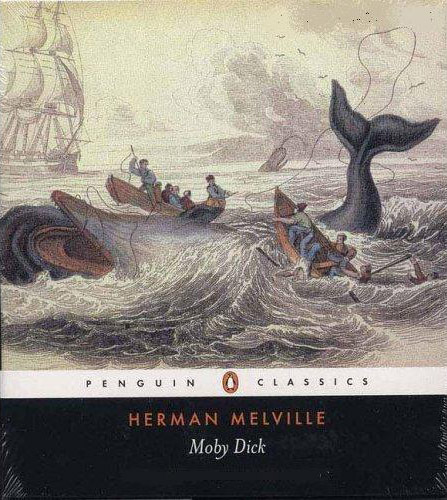
Weekly Brain Teaser - This week: Herman Melville

Most people know that Herman Melville was the author of "Moby-Dick" (often spelled as two separate words) but there was a lot more to the man than this. See if you can answer these questions about Herman Melville and his work.

(Compliments of Xreferplus)

  • Questions:
    1. In which American city was Herman Melville born?
    2. What was the name of the captain in "Moby-Dick" who led the voyage to kill the white sperm whale?
    3. Was Melville's "Billy Budd" published before or after his death?
    4. What is the opening sentence of "Moby-Dick"?
    5. Name one of the five novels which Melville published before "Moby-Dick".
    6. To which English port did Melville sail in 1839?
    7. Where did Melville work from 1866 to 1885?
    8. Which British composer wrote an opera, first performed in 1951, called "Billy Budd" which was based on Melville's book of the same title?
    9. Herman Melville dedicated his "Moby-Dick" to which other writer?
    10. Which islands are the setting for Melville's novel "Typee"?